Rummy How-To: Use a Two-Minute Hand Inventory
A hand inventory is a brief pause in which you describe your cards before choosing a discard. It is not a prediction exercise. Its purpose is to prevent familiar mistakes such as overlooking a pure sequence, counting a card twice, or keeping a high card because it feels connected to a plan that no longer exists.
Start by sorting the hand into suits and ranks. Identify complete structures, near structures, pairs, and isolates. Say the categories quietly or write them down. For example: one confirmed sequence, one pair with two possible companions, and three isolated cards. This description is more useful than saying the hand is good or bad.
Next, mark the cards that are essential. An essential card is one whose removal breaks a required structure or leaves no plausible route to a valid finish. Then mark flexible cards that can serve more than one plan. Finally, mark expensive cards that have neither a structure nor a realistic destination. The last category deserves immediate attention.
Check the table information. What has recently entered the discard pile? Has an opponent taken a card that changes the value of one of your routes? Are you late enough in the hand that a narrow draw needs a deadline? These observations do not need to be exact probabilities. They simply keep your private hand from becoming the only source of evidence.
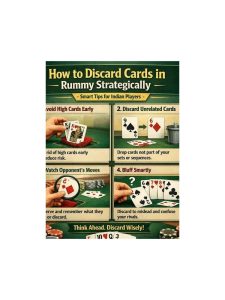
Now rank possible discards using three filters: structural damage, point risk, and future usefulness. Prefer a discard that damages the fewest good structures, removes the most penalty, and has the fewest believable destinations. If two cards are similar, choose the one that gives your next turn a clearer decision.
Keep the inventory short. If it takes longer than two minutes, you may be trying to solve the whole hand at once. The goal is to identify the next sensible move, not to guarantee the final arrangement. After the discard, accept that the inventory is complete for that turn and wait for new information.
Practice the routine during low-pressure games. Stop after a few turns and compare your inventory with the cards you later drew. Notice whether your categories were accurate or whether you called a narrow plan flexible. With repetition, the process becomes a calm habit that reduces impulsive discards without slowing every decision.
The inventory is especially helpful when a hand feels nearly complete. Those hands invite overconfidence because several cards look useful. A two-minute check exposes which routes are real, which are duplicated, and which card is merely being protected by hope.