Rummy Set or Sequence: A Practical Choice When Both Are Possible
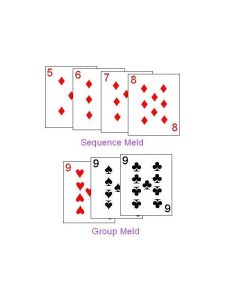
Some rummy hands contain a useful overlap: a card can join a set with one group of cards or extend a sequence with another. The choice is not decided by appearance. Compare which arrangement moves the hand closer to the format’s required combinations and which one leaves better options for the next draw.
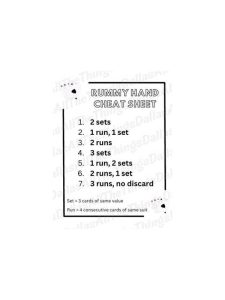
Check mandatory requirements first. If the hand still lacks a pure sequence, protect the route that can supply it. A completed set may look satisfying, but it cannot replace a required natural sequence. Similarly, if another sequence is already secure, using an overlapping card in a set may complete a needed group without damaging the hand.
Then examine flexibility. A middle card in a same-suit run can often accept two neighboring ranks, while a duplicate rank may have fewer partners because suits matter. The exact value depends on cards already held and on what has appeared in the discard pile. Evaluate the actual hand, not a general ranking chart.
Consider what the arrangement forces you to release. Making a set may leave two isolated cards, while keeping the sequence may allow one of those cards to connect later. Draw a quick imaginary turn: if the next card is a likely connector, which arrangement benefits? If no improvement arrives, which arrangement leaves the lower point risk?
Information can matter too. Taking a visible card to complete a set may reveal less than taking a card that clearly extends a sequence, or the reverse may be true depending on the table. When strategic values are close, choose the route that preserves privacy and avoids feeding an opponent’s likely plan.
Finally, remember that groups are not permanent until the hand is declared. Keep the cards physically or digitally arranged so you can reassess them. A good overlap decision is provisional: it gives the current hand a clear structure while allowing a better draw to change the plan. The goal is not to prove that sets or sequences are superior, but to use the overlap deliberately.
If the choice remains close, favor the arrangement that is easiest to verify later. Clear groups reduce declaration mistakes and make a new draw easier to evaluate. You can always move the overlapping card again; keeping the hand understandable is itself a form of flexibility.
When practicing this choice, pause the hand and write both possible arrangements. Compare the unmatched cards and the next likely connectors. This exercise trains the comparison itself, so the decision becomes faster when a live hand presents the same overlap.