Rummy Practice: Create a Blind Sorting Drill
A blind sorting drill temporarily removes some of the cues that make a hand feel easy. Instead of immediately arranging cards into your preferred pattern, you inspect a small set and describe its structure from memory or with neutral marks. The goal is not to make play harder for its own sake. It is to strengthen recognition when the hand is untidy.
Keep the drill honest by changing the hands occasionally. If you repeat one arrangement too often, you may memorize its answer instead of improving recognition. Include examples with a tempting but narrow route, a useful completed group, and a few cards that look related but do not form a legal combination. Those variations test whether you are seeing structure or merely matching familiar shapes.
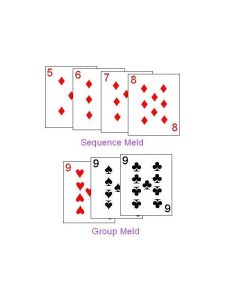
Choose a practice hand with a mixture of connected cards, an incomplete group, and at least two isolated cards. Look at it briefly, then cover or mix the cards. Write the cards you remember by broad role: completed, connected, candidate, or isolated. Do not worry about perfect recall during the first attempts. The exercise measures which structural cues you notice first.
Reveal the hand and compare your list. Did you remember a useful connector but forget a high-cost isolated card? Did you call a narrow candidate a strong route? These differences show where your attention goes naturally. Repeat the same hand once, this time naming the missing card types for each route before you rearrange anything.
A second version uses a short delay. After viewing the hand, wait a minute while doing an unrelated task, then reconstruct the structure. This tests whether your plan depends on a visual arrangement that disappears when the screen changes. If recall drops sharply, simplify your labels and focus on completed groups, open routes, and dead weight.
Keep the drill separate from performance pressure. Do not use real-money decisions or a live timed table as the test. The value comes from observing your process without a costly consequence. Five minutes several times a week is enough to reveal patterns.
Finish by choosing one improvement target. It may be noticing isolated high cards, remembering shared connectors, or distinguishing broad routes from exact waits. Track that target across sessions. Once it becomes automatic, replace it with another. A blind sorting drill builds a flexible mental inventory, helping you make clear decisions even when the hand does not look organized at first glance.