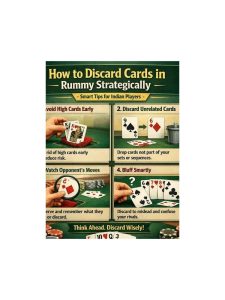
Rummy How-To: Use a Two-Minute Hand Reset

A hand can become confusing after several draws, especially when an early plan has partly worked and partly failed. A two-minute reset is a quick procedure for clearing the old story and looking at the current cards again. It is useful in practice and in live play whenever the rules and timer allow enough attention.
First, stop predicting. Do not ask what the hand was supposed to become. Look only at the cards currently available. Sort them into stable groups, developing groups, pairs, and isolated cards. A stable group is one you would be reluctant to break. A developing group has a plausible next connection. An isolated card has no convincing job yet. This first pass should be descriptive rather than judgmental.
Second, mark the required structure. In formats that require a pure sequence, identify whether that requirement is satisfied. If it is not, give it priority over decorative sets or ambitious long sequences. Rules differ across games and platforms, so confirm the table’s exact declaration conditions before using any fixed formula. The reset is a thinking tool, not a substitute for the rules.
Third, choose one primary route and one backup route. The primary route should use the strongest existing structure and the most realistic connections. The backup route should be different enough to remain useful if the next draw is unhelpful. Avoid naming five routes. Too many plans create the feeling of flexibility while making every discard harder.
Fourth, select a review point. Decide what evidence would make you change course: perhaps one more unhelpful draw, a visible card that closes a route, or a high-point card that becomes too expensive to keep. A review point prevents a temporary plan from silently becoming a permanent commitment.
Finish by choosing the next discard using three filters: preserve required structure, reduce costly isolation, and avoid an obvious gift when two choices are otherwise equal. Then return to normal play. The reset should not become an excuse to spend every turn rearranging the hand.
Afterward, note whether the reset changed your decision. If it did, identify the category you had overlooked. If it did not, the procedure still confirmed your original plan. Repeated use makes the reset faster and helps you distinguish genuine uncertainty from the discomfort of a hand that simply has not developed yet.
If the clock is running, shorten the reset to three phrases: requirement, strongest group, next discard. The full procedure is for practice and for moments when there is time to think. Under pressure, preserving the order of priorities is more important than saying every label aloud.