Rummy Tips: Give Every Unmatched Card an Exit Plan
An unmatched card is not automatically bad. It may become a connector, complete a set, protect a discard, or serve as a useful pivot when another card arrives. The danger is keeping it without knowing which of those jobs it is supposed to do. Giving every loose card an exit plan makes your hand easier to manage.
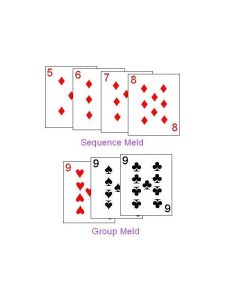
Begin by separating cards into three groups: cards already contributing to a valid structure, cards with two or more plausible improvements, and cards with only one narrow possibility. The first group needs protection. The second group deserves a time limit. The third group needs an exit plan immediately. This classification avoids treating every hopeful card as equally valuable.
For a card in the second group, name the improvement you are waiting for and one alternative use. For example, a middle card may join a same-suit run or a same-rank group. If neither path is attractive after a couple of draws, release it. The alternative use might be discarding it safely, using it to break a crowded set of possibilities, or retaining it only because the visible information makes it unusually unlikely to help an opponent.
For a narrow card, set a one-turn rule. If the needed neighbor does not appear, discard unless the card has gained a new role. This is not a rigid mathematical law; it is a guard against emotional attachment. A card that has been waiting several turns without becoming more useful is often occupying space that could support a more flexible plan.
An exit plan should also account for what you reveal. If discarding a card gives away a clear connection, consider whether another loose card has a similar cost. Choose the discard that ends the weakest plan while revealing the least useful information. When all options are imperfect, ending a plan cleanly is often better than preserving several weak plans at once.
Review the decision after the hand. Ask whether the card’s role was specific or merely described with words such as “maybe” and “could.” Those words are normal during exploration, but they should not be the final reason for holding. A good exit plan lets you experiment without letting uncertainty take over the whole hand.
You can make the habit visible by placing a small mental mark beside each loose card: route, deadline, or discard. The mark need not be shared with anyone. Its purpose is to ensure that every retained card has a reason that can be tested.