Rummy Practice: Rotate the Dealer Perspective
Rotating the dealer perspective is a useful practice exercise even when an online table handles the deal automatically. The exercise asks you to study the same hand from different positions: first as the player acting early, then as the player acting after more visible information has appeared. It develops awareness of timing without requiring a new strategy for every seat.
If you do not have a recorded hand, make three simple sample hands and rotate them on paper. Keep the cards constant while changing only the imagined order of public events. This prevents the exercise from becoming a memory contest. You are studying how evidence affects a decision, not trying to prove that one seat always has an advantage. Write down any assumption that changes between rotations so you can test whether the change was justified.
Begin with a recorded or invented starting hand and write down your first two possible plans. Do not decide the winner of the exercise yet. Imagine that you act before any other player has revealed a useful discard. Your decision should emphasize flexibility because the table contains little information. Mark the cards you would protect and the card you would release first.
Now rotate the perspective. Imagine that two players have already taken turns and that you have seen one or two public discards. Reconsider the same hand as if it had arrived at that later point. The hand itself has not changed, but the information around it has. Ask whether a previously attractive route is now less practical, or whether a new route has become easier to compare.
A third rotation can focus on the player who acts immediately after you. This is not an invitation to predict hidden cards. Instead, notice whether your proposed discard is easy to explain from your own hand and whether you are keeping a useful card merely because you fear a hypothetical response. The exercise teaches a boundary between reasonable caution and imagined control.
Keep the review short. For each perspective, record the preferred discard, the main completion route, and one uncertainty. Comparing those three lines is more useful than writing a long story about every possible draw. Look for changes in reasoning: did you become too aggressive when acting early, or too conservative when more information became available?
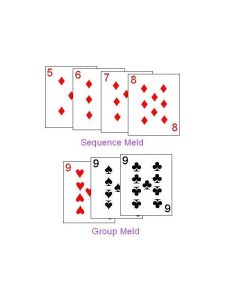
Repeat the drill with hands containing different structures, such as a completed group plus isolated cards or two competing sequence routes. Over time, you will notice which decisions truly depend on position and which remain sound from every perspective. That distinction makes live play calmer, because you can adapt to timing without abandoning a clear plan.