Rummy How-To: Recover Structure After a Bad Break
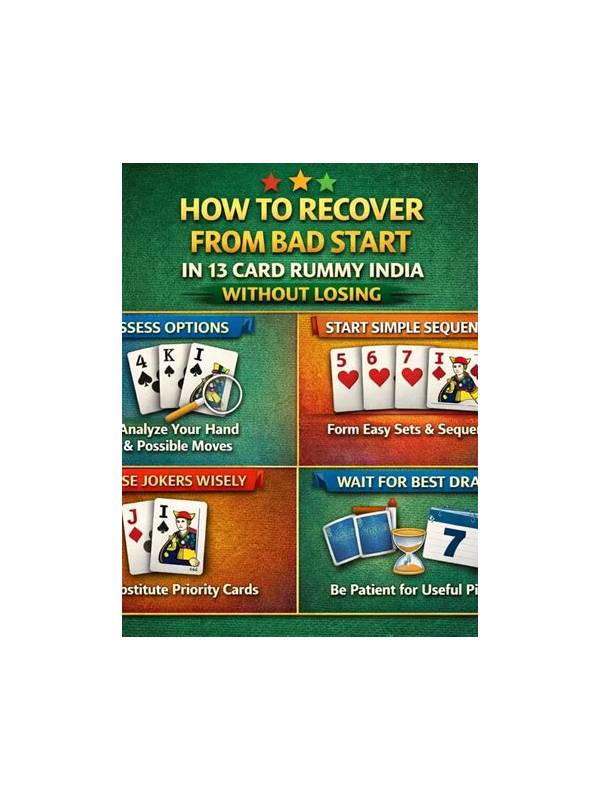
Sometimes a table decision or a new card leaves you with a discard you did not want to make. The useful response is not to replay the mistake while the hand continues. Rebuild the hand from the cards that remain, then choose a plan that matches the new position.
Begin by removing the discarded card mentally and looking at the remaining cards without ranking them by your old intention. Mark any confirmed sequences or sets first. If the forced discard broke a possible group, treat the survivors as separate cards until another connection appears. This avoids carrying a vanished plan into the next turn.
Next, identify the strongest replacement structure. Prefer arrangements that use several existing cards and can accept more than one helpful draw. A pair with two possible extensions may be more useful than a single card waiting for one exact rank. At the same time, watch for a requirement such as a pure sequence that must be built early.
Review point exposure before choosing the next discard. If several high-value cards are now isolated, reduce that risk unless one of them has exceptional flexibility. A low-value card is not automatically safe, but it often gives you more time to rebuild. Check the visible pile and recent actions for clues about which discard might be useful to another player.
Use one-turn commitments. Decide what you want the next draw to accomplish, such as extending a sequence, completing a set, or replacing an expensive singleton. If the draw does not help, reassess rather than protecting the same idea indefinitely. This keeps the reset active and prevents a forced discard from turning into a chain of forced decisions.
After the hand, review the decision separately from the result. Ask whether the discard was required by the rules, whether another card could have been released, and what information was available at the time. A sensible discard can still lead to a loss, while a poor discard can occasionally be rewarded. Judge the quality of the reset, not only the final score.
The key is speed without panic. A forced discard changes the position, but it does not erase every useful card. Sort what remains, protect legal structure, lower unnecessary exposure, and give yourself a single clear next objective. That process restores control even when the original plan is gone.
If the discard was caused by an interface mistake, check whether the platform has an undo or support process before taking another action. Do not click repeatedly while upset. A brief pause can prevent a second error, and the same rebuilding checklist still applies after the table resumes.