Rummy Guide: Read a Hand by Its Missing Links
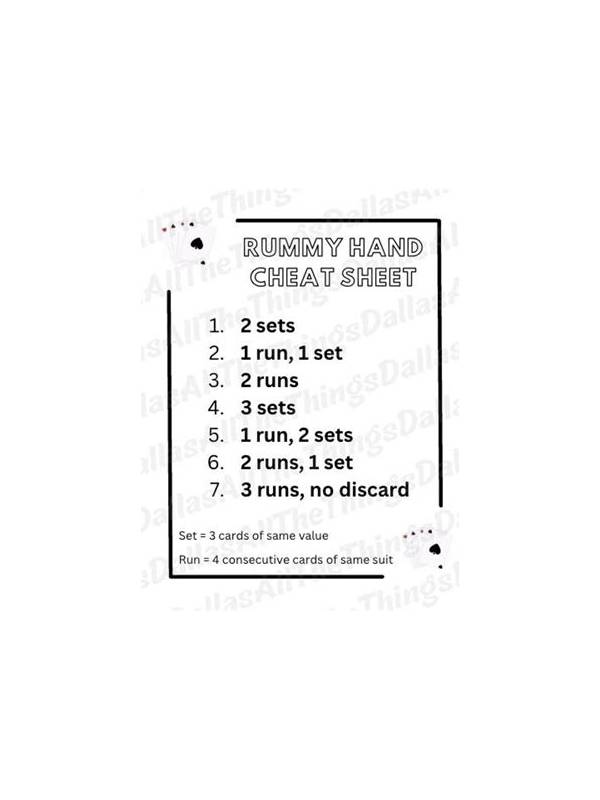
Many rummy players describe a hand by its visible pairs and runs. A more useful description is often the list of missing links. A hand with two connected cards may be promising, but it is the absent third card that determines whether the idea is practical. Naming those gaps makes a draw decision more deliberate and keeps attractive fragments from receiving too much attention.
Begin by sorting the cards into three groups: completed groups, partial groups, and cards with no current partner. Do not treat a pair as a nearly finished group automatically. Ask what exact cards would complete it, whether those cards are still plausible, and whether using one of them would create a valid sequence or set under the rules of the format.
Next, write a short missing-link list. For example, a suited six and seven might need a five or eight, while a pair of queens may need either a third queen. The point is not to predict the deck. It is to compare the quality of the gaps. A gap with several useful outcomes is more flexible than one that depends on a single unseen card.
Consider overlap carefully. If one card could complete two different ideas, it has information value, but it can also keep your hand crowded. Decide how long you will keep the overlap alive. A simple rule is to reassess after one additional draw or after the table reveals evidence that changes the odds. Without a deadline, flexible ideas can become permanent clutter.
Also compare the cost of waiting. A low-point pair that has many completion options may be worth holding, while a high-point pair with one narrow out may expose you to unnecessary loss. This is not a promise that low cards always win; it is a reminder that the value of a fragment includes both its potential and its cost if it remains unfinished.
Before discarding, say the hand’s current story in one sentence: “I have one stable group, one broad gap, and two cards with no job.” That sentence makes the weakest cards easier to identify. After the round, check whether the missing-link list helped you act sooner. Over time, this method trains attention toward completion quality rather than toward cards that merely look connected. Use the same method when reviewing an opponent’s public discard pattern, but keep the distinction between a missing link in your hand and a card you merely suspect another player wants. Your decisions should be based on what improves your own legal completion first. The missing-link list is a prioritization tool, not a forecast of hidden cards. It works best when it remains short enough to update after each meaningful change.