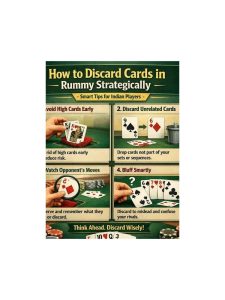
Rummy Guide: Choose a Table Pace That Fits Your Attention
Online rummy is often discussed as if every table demands the same mental rhythm. It does not. A quick table rewards immediate recognition, while a slower table gives more room to compare options. Choosing a pace that fits your attention is therefore a practical part of preparation, not a minor preference.
Start by checking your available focus. If you are tired, distracted, or switching between tasks, a fast table can turn ordinary decisions into rushed guesses. A slower format, practice room, or short break may be more suitable. If the platform does not let you choose the pace, treat that as information and decide whether you are ready to continue.
Next, notice the time between turns. Use it to complete one small task: identify your current groups, review your highest-risk card, or decide whether the visible discard helps your route. Do not try to calculate every possible future hand. A simple routine is easier to repeat when the table accelerates.
Pace also affects how you respond to a mistake. At a quick table, a missed discard can create pressure to recover immediately. That pressure is a warning sign. Keep the next decision independent from the previous one, and use the available pause or exit option if your judgment feels hurried.
Before joining, set a session limit and a clear stopping rule. You might stop when attention drops, when you begin clicking before checking the hand, or when the planned time ends. These rules protect the quality of your decisions without promising a particular result.
The best table pace is the one that leaves enough time to see the hand you actually have. Choose deliberately, use a repeatable review, and treat a slower session as a valid way to practice disciplined thinking. If the interface shows several table types, compare more than the label. Look for the turn timer, number of players, and whether the format is a single hand or a longer contest. A familiar name can hide a pace that does not suit your current concentration. Read the help text and make a low-stakes test when possible.
Pace is also a social and practical consideration. If you are interrupted, do not treat returning to the screen as a reason to click quickly. Reconstruct the last visible state, check whose turn it is, and continue only when the situation is clear. A deliberate pause is part of good table discipline.