Rummy FAQ: When Is a Flexible Card Worth Keeping?

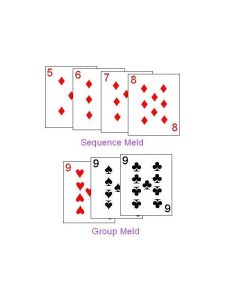
What makes a card flexible? A flexible card can support more than one credible meld. A middle rank may connect to neighbors in the same suit and also belong to a possible set with copies of its rank. A joker can support several plans, but it still has an opportunity cost. Flexibility describes available routes, not an automatic reason to keep a card.
Should every flexible card stay in the hand? No. Keeping too many options can prevent the hand from becoming organized. If a card has three theoretical roles but none fits your strongest groups, its flexibility is only potential. Compare it with the cards you would need to discard and with the penalty you would carry if the hand ended now.
How can I test its value? Name two concrete routes and the cards each route needs. Then identify a backup role if neither route develops. For example, a middle card may support a same-suit run or a rank set. If one route needs several exact cards and the other conflicts with a confirmed sequence, the card may be less flexible than it first appeared.
When should I release it? Release a flexible card when the hand has a clearer structure, when its routes are blocked, or when holding it forces you to retain a costly isolated card. A time limit helps: after one or two unhelpful turns, reassess the card instead of defending the original plan. New visible discards can also change its value.
Is flexibility more important than a completed group? Usually not. A reliable legal group reduces work and may lower risk. Still, avoid breaking a strong group merely to chase theoretical flexibility. The best decision depends on the whole hand, the variant, the score position, and the cost of waiting. Think of flexibility as an option that must earn its place, not as a permanent privilege. The same idea applies to a card that looks safe because it is low in value. Low penalty is useful, but it does not prove that the card has no strategic role. Before releasing it, confirm that it is not the only bridge between two groups or the only card that can satisfy a variant requirement. A brief role check prevents both careless discards and endless hoarding. In a practice round, say the reason for the choice in one sentence before moving on. This makes the idea testable and keeps the review anchored to evidence. If the hand changes, update the sentence instead of defending the old plan. The cards will still contain uncertainty, but the decision will have a clear basis. A short routine also works for beginners because it focuses attention on one visible trade-off at a time. After several rounds, compare the sentences and note which assumptions were consistently useful, which were too narrow, and which caused unnecessary delay. That comparison can guide a focused drill for the next session.