Rummy Tips: Use a Reset Point When the Hand Gets Messy
Messy hands are not always losing hands. They are hands in which too many partial ideas compete for attention. A reset point gives you a short procedure for returning to the visible facts instead of continuing with a plan you no longer understand.
Choose a reset trigger before playing. It might be the moment you have three or more incomplete groups, when you cannot explain your intended discard in one sentence, or after an unexpected interruption. A trigger prevents embarrassment from delaying the reset. Confusion is a signal to improve the view, not a reason to hide it.
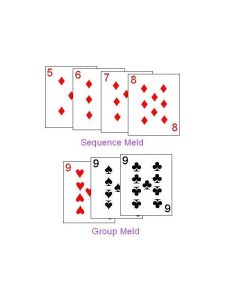
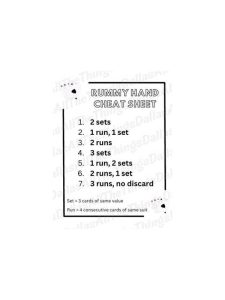
At the reset point, place the cards into broad roles: confirmed groups, promising groups, flexible cards, and isolated cards. Do not try to solve the entire hand while sorting. First make the information readable. Then check any mandatory structural requirement for the format, such as a required pure sequence.
Next, identify the strongest route and the safest alternative. The strongest route has the clearest path to completion. The safest alternative retains useful flexibility if the next draw misses. If you can describe neither route, choose the discard that removes the most expensive uncertainty and continue observing.
Avoid treating the reset as permission to break everything. Stable groups should remain stable unless the new view reveals a concrete improvement. A reset changes your evaluation; it does not automatically change every card. This distinction keeps a helpful pause from becoming random rearrangement.
Practice the procedure with timed drills. Deal a hand, deliberately add a distraction, and then run the reset in under a minute. Check whether you can explain your next draw and discard. With repetition, the reset becomes a normal part of hand management and helps preserve accuracy when the table becomes fast or noisy.
Do not use a reset to avoid learning the original error. After the hand, ask what caused the view to become messy: poor sorting, too many speculative pairs, a missed rule, or simple distraction. The reset solves the immediate problem; the follow-up identifies a preventive habit. Both steps matter if you want fewer resets over time.
The best reset is brief, repeatable, and compatible with the table’s rules.
If the interface makes rearranging difficult, use a simple mental order or a permitted note instead of repeatedly changing the display. The reset should improve visibility, not create a technical distraction. In a live group, announce only what the rules require and keep the internal review concise so other players are not delayed.