Rummy How-To: Make a Discard Decision in Three Passes
A discard decision can feel difficult when every card has at least one possible use. A three-pass process reduces that noise. The first pass checks structure, the second checks risk, and the third checks the next turn. The process is deliberately brief so it can be used during ordinary play.
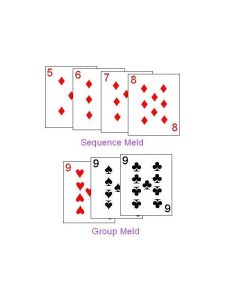
In the structure pass, group the hand by actual relationships. Mark complete melds, near sequences, possible sets, and isolated cards. Do not promote a card merely because it could connect in an imagined future. The goal is to see what the hand currently supports. Cards with no role become initial discard candidates, while cards supporting more than one route receive closer attention.
In the risk pass, compare the candidates. Consider point exposure, the chance that a discard helps another player, and the cost of breaking your own strongest structure. A safe-looking card may be expensive if it is the only bridge between two useful cards. A high card may be the better discard when it is isolated and has no credible repair route. Risk is about the whole position, not one feature.
In the next-turn pass, ask what information the discard preserves. Which cards would you be happy to draw? Does the choice leave a clear plan, or will the next hand review be just as confused? Prefer a discard that reduces uncertainty when two candidates are otherwise close. A cleaner hand is often easier to play than a slightly more flexible but tangled hand.
If the decision remains tied, use a predetermined tie-breaker such as lowest replacement cost, lowest point exposure, or least damage to a clean sequence. Choose one tie-breaker before the moment arrives so emotion does not select a new rule each time. Then make the move and avoid replaying it immediately unless new information changes the position.
Afterward, review only the decision, not the result. A discard can be sound even when the next card would have completed it. Record which pass produced the clearest evidence and which pass you skipped. Repeating this small routine builds a reliable decision habit while leaving room for adaptation when the hand genuinely changes. The three passes should not become a ritual that delays an obvious move. If one card is isolated, costly, and unsupported while another protects a clean sequence, the answer may be clear after the first pass. The process is a safety rail for close decisions. Its success is measured by better explanations and fewer avoidable mistakes, not by the amount of time spent thinking.