Rummy Guide: Separate Rule Errors From Strategy Errors
A poor result can come from misunderstanding the variant, choosing badly within the rules, or simply encountering an unlucky draw. These are different problems. If you call every loss a strategy error, you may practice the wrong skill. If you call every illegal move a bad break, you may repeat the same mistake.
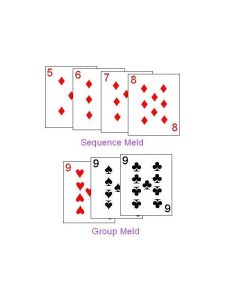
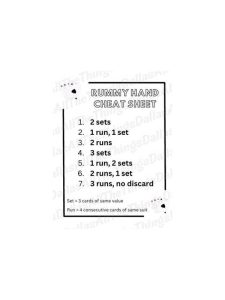
Start a review by checking the rule layer. Was the group valid? Did the variant require a pure sequence or a minimum length? Was the draw, discard, or declaration action allowed at that moment? Use the official rule information for the format rather than relying on memory from another table.
Next examine the decision layer. Assuming the move was legal, what alternatives were visible? Did you compare route requirements, penalty exposure, and fallback options? A strategy error is a choice that could reasonably have been improved with the information available then. It is not a decision judged only by the card that appeared afterward.
Keep luck separate. If two legal choices had similar value and the result depended on an unseen draw, record the uncertainty instead of inventing a clear mistake. This prevents hindsight from turning normal variance into a false lesson.
Use three review labels: rules, process, and chance. Add one sentence under the most relevant label. For a rules issue, write the exact rule to verify. For a process issue, write the missed comparison. For chance, write what was unknowable. This format keeps the review short and actionable.
Over time, the labels show patterns. Repeated rules issues call for a rule-sheet review. Repeated process issues call for focused drills. A large chance category may mean your decisions are reasonable but your expectations need adjusting. Accurate labels turn disappointment into a better next session.
The review is complete when it gives you one specific action for next time. More labels are not automatically more insight; clarity is the useful outcome.
For example, the action might be “read the variant summary before the next practice hand” or “compare two routes aloud before discarding.” A concrete action is easy to verify and easy to stop once it becomes routine. Do not let the labels become another scoring system. The purpose is diagnosis, not self-punishment. A single rules error may be fixed by reading the variant summary, while a recurring process error may need a practice drill. If the same event fits two labels, choose the one that offers the clearest next action and mention the other only as context. After a few reviews, check whether the chosen action changed your decisions. If it did not, revise the drill rather than adding harsher criticism.