Rummy Strategy: Use Public Information Without Overfitting
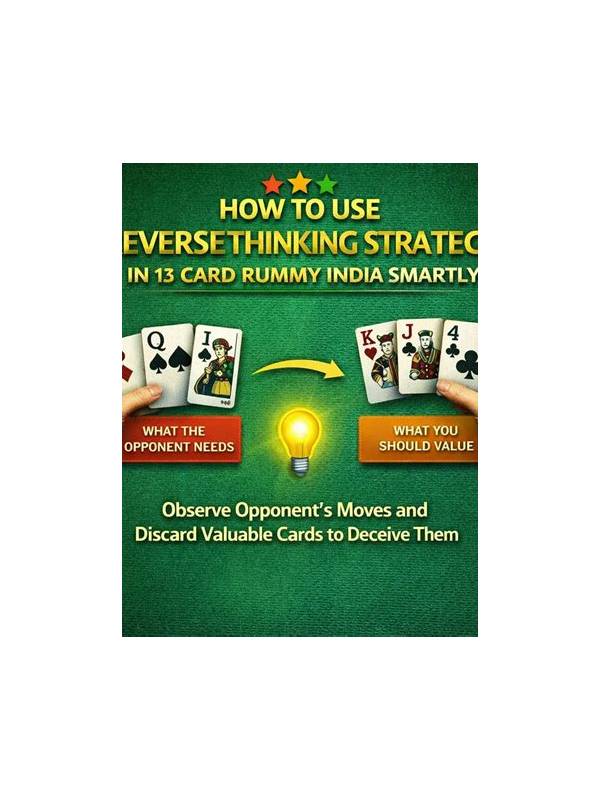
Discard piles and visible actions provide information, yet they can also invite overconfidence. One player taking a card does not prove an entire strategy, and one discarded rank does not prove that a suit is safe. The goal is to use public information as a useful adjustment while keeping your conclusions proportionate to the evidence.
Start with facts that are directly visible: which cards have appeared, which cards were taken from the discard pile, and how quickly the table is moving. Separate those facts from interpretations such as “that player must be building hearts.” A note or mental label can help: observed, plausible, uncertain. This prevents a guess from silently becoming a rule.
Use public information to compare options. If one candidate card would complete a structure that is already strongly signaled by an opponent, it may be less attractive to pass or discard. If several copies of a needed card have appeared elsewhere, reduce the value of waiting for it. These adjustments should influence a choice, not dictate it, because the unseen cards and other players’ plans remain unknown.
Watch for overfitting, which means explaining every new event with the same story. A player may take one card for a reason unrelated to the pattern you imagine. A discard may be a safety move rather than evidence of a finished group. If your prediction fails, update the estimate instead of inventing a more complicated explanation that preserves it.
After the hand, review one inference. Was it based on a visible action? Did it change your decision in a useful way? Did you treat uncertainty honestly? This kind of review turns observation into disciplined strategy. Good table reading is not mind reading; it is a modest use of evidence that leaves room for alternatives.
One practical safeguard is to ask what you would do if the interpretation were wrong. If the answer is still a reasonable discard or draw, the inference is being used appropriately. If the entire hand depends on your guess, reduce its weight and return to your own structure. This keeps public information useful without allowing a speculative story to control every decision.
Public information is most valuable when it changes the order of your priorities. It can tell you to protect a card a little longer, lower the value of a narrow draw, or inspect a discard more carefully. It rarely tells you exactly what to do. Keep your own hand, the rules, and the deadline at the center of the decision, then use observations as supporting evidence.